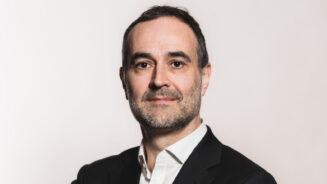
“There is definitely regulatory risk at the stock level,” Jenkyn-Jones told International Adviser’s sister website Fund Selector Asia, in a recent visit to Hong Kong. “But there isn’t one aggregated risk.”
Regulations for each type of environmental company are often unrelated, he explained, making regulatory risk diversified.
“What’s happening in building efficiency companies in Hong Kong is not really correlated to renewable energy subsidies in Europe, and they are not related to hazardous waste standards.”
The Impax team monitors their strategies and tries to avoid not investing in a series of companies that are exposed to the same regulations, he said.
Besides regulation, Jenkyn-Jones said that investors should also be aware of the different cycles each sector is exposed to.
“There is a very compelling long-term secular story for environmental stocks, but you should know if these clean product solutions are selling into cyclical end-markets, which could be automotive, construction, agriculture or industrials. Each has its own business cycle.”
In the firm’s portfolios, the team has a top-down overlay as part of its process to analyse sector cycles. For example, for clean energy companies that are exposed to construction, the firm monitors construction cycles. In the case of recycling companies, it considers the commodity cycles of oil, plastics and paper.
“The overlay helps us decide the size positions at the stock level,” he added.
Impax AM, which is an affiliate of BNP Paribas Asset Management (it owns 25% of the firm), only makes investments in resource efficiency and environmental businesses. It has four equity strategies: global environmental, water, food and a small-cap strategy. They are only available to professional investors.
Jenkyn-Jones is the co-lead manager of the global environmental and water strategies, alongside Hubert Aarts, who is also the co-head of listed equities.
There are 1,500 stocks in the firm’s investment universe, which filters for companies with at least 20% of revenue derived from environmental markets, such as energy efficiency, renewable energy, waste efficiency and water.
For sector-specific strategies, such as the water strategy, the investment universe is only 300.
The team has 15 analysts who apply financial and ESG screens to filter down stock selections. Then a “quality screen” is also applied, which involves the analysts meeting with companies to do a full ESG risk analysis, he said. Around 300 stocks end up on the “A-list”, from which the managers select for their portfolios.
Each portfolio has around 40-50 names. The strategies are benchmark-agnostic, with the goal of outperforming global equities in the long-run, Jenkyn-Jones said.
The initial ESG screen is very different from the full ESG risk analysis, he noted. For the initial ESG screen, the firm makes use of third-party providers, such as the MSCI ESG database, while the full-ESG screen is based on what the analysts think is important for a specific sector.
“It varies by country and it varies by sector and every company has a specific ESG review,” he said.
In addition, he noted that third-party ESG providers may not cover all companies listed globally. “They put a lot of weight on disclosure and some of the smaller companies just haven’t got all the resources to get their disclosure sorted out. By having one-on-one meetings we can better understand how well things are managed.”
When asked whether the ESG governance checks differ from the standard due diligence practices used to vet the all investments, Jenkyn-Jones said there is not much of a difference.
He added, however, that there is no one universal way of analysing corporate governance.
“What is important is in different countries, you have different regulations around governance. So if you try to have a one-size-fits-all of the way you assess governance, you might become stuck. It’s very important to put in context the region or country-specific situations.”