Shares in Berkshire Hathaway rose above $200,000 for the first time last week, while Circassia stock was trading around £3 per share at the close of play on Friday. Berkshire has holdings ranging from insurance to shoes and arguably the world’s most well-known investor, Warren Buffett, at its helm; Circassia is a biotech firm in the allergy vaccine business with a rather lower global profile.
But, a slightly deeper look at the share registers of the two firms reveals the presence of something else –patient capital.
The main reason for Berkshire Hathaway’s extreme share price is Buffett’s steadfast refusal to split the company’s stock, arguing as far back as 1983 that such an action would result in a class of buyer inferior to those selling out.
According to Buffett, a stock that is hard to trade means those that do buy in are more likely to have a long term view of the success of the business and are likely to be more willing to stay the course if there are ups and downs along the way.
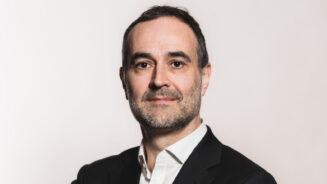
In Circassia’s case, the patient capital comes in the form of an investment from Neil Woodford’s eponymous fund. According to Woodford, he first invested in it as an unquoted firm when at Invesco and has retained the holding in his new fund.
“Early-stage technology companies need nurturing – they need patient, long-term capital in order to fulfil their long-term potential,” Woodford wrote recently.
“The last thing an early-stage technology company needs is for the rug to be pulled out from underneath it just as it starts to blossom … The problem is a lack of appropriate capital and the wrong investment horizons, resulting in a lack of ambition.”
Nick Train, manager of the Finsbury Growth and Income Trust, provides another view of this, explaining to Portfolio Adviser recently: “There is a fundamental question to ask about a one’s approach to equity markets: do you, over time, expect to make money for your clients by taking advantage of the volatility of asset prices or do you expect to make returns by participating in the wealth creation that goes on within successful companies?”
Train continued, paraphrasing Buffett, that the ideal holding period for any stock that one invests in is forever, or at least the full term of a career.
“Ideally we wouldn’t sell anything that we have bought because we would hope that the companies we invest in are constantly finding ways to increase their intrinsic value and their dividend over time. And, on a post hoc basis it would seem that the best companies do this,” he added.
In a world that seems to be judging investment performance in ever shorter increments, the ability to be patient is an increasingly rare commodity.
Right now volatility is low, correlations within major markets high and as summer drags on there is a rather marked complacency about the geopolitical risks currently permeating markets. With September fast approaching one can’t help but worry that such a state can’t carry on forever and, when things do change, cool, calm heads maybe in even shorter supply.
And as basic economics will tell you when supply shrinks value increases.